Monday, March 21, 2016

ROTIMI AMAECHI'S WEEK IN PORT HARCOURT


That Rotimi Amaechi is an irresponsible Federal Minister is the least of our worries. Our main worry is that he is still on the job - uncautioned, unquestioned, unsanctioned by his employer.

Why irresponsibility?

Come with me.

I am three months into administrative apprenticeship as head of an academic unit in a University. I've never been in Admin so it's a learning process and I am enjoying every bit of it. You can therefore pardon my naivete when the time came to leave my seat and be absent for a week.

Nigeria happened to me in terms of what I thought the procedures of absence would be.

I called my predecessor and asked him if he didn't mind being Acting Director during my absence and he graciously agreed. I thought that was it.

Poor me!

I was soon thrown into a daunting administrative architecture of disengagement. Two Deans must be notified of my absence; the principal admin staff of the two Deans must be notified; a certain number of people in offices I have never heard about must be notified; the financial office must be notified.

These are all arteries of the administrative system that must be aware of who has signatory authority for the unit in my absence. Oyinbo's work must neither stop nor suffer in your absence.

Throughout the week, the web of required notifications kept expanding. When I finally heaved a sigh of relief and thought it was all over, I received a memo from yet another office asking if I wanted to transfer electronic signature authority to the Acting Director.

Apparently, all I had done during the week did not cover electronic signatures as I could very well decide to hold on to e-authority and sign things electronically during my absence.

Knowing that there is no light, no water, no nothing where I am heading to and my access to the internet could depend on the strength of prayer warriors yonder, I respected myself by also transferring electronic authority to the Acting Director.

One week of painstaking procedures to transfer authority of just one unit in a University just because one society evolved a culture of hatred for impunity and lawlessness - a reality which makes the Institution bigger than the person.

As I went through this handing over process, my blood pressure increased and my health deteriorated. I grumbled to Bamidele Ademola-Olateju, Moses Ochonu, Rudolf Ogoo Okonkwo, and Omoyele Sowore.

I told them that I am tired of Nigeria. Here am I being told that the life and work of one academic and administrative unit in a University is incompatible with the ethos of Oga is not on seat. You cannot just take off and go.

That is just one Unit in a University o.

Yet, some useless state governor will be responsible for the lives of about ten million people and will just take off and travel - no handover, no continuity, etc. The life of the state and the people stops once Oga is not on seat. No process, no institutional integrity.

Yet some useless Senators will abandon their duty posts just like that.

Yet some useless Federal Ministers will just take off and leave.

Think of how many Directors, commissioners, etc just take off and leave in Nigeria.

Just like that!


Who, for instance, authorized Rotimi Amaechi's week in Port Harcourt? What were the procedures of disengagement and continuity that were undertaken in his Ministry? How were the perm sec and the Directors in his Ministry notified and what was delegated to who? And which superior authority signed off on this trip to Port Harcourt? What did he say he was going to do in Port Harcourt? Did he tell whoever his superior is that he was abandoning his duty post to go and play gutter politics in Port Harcourt?

A Minister, as we know, has one superior authority. Did he authorize Amaechi's absence from work? Was he notified? Or is it just the Nigerian way? After all, Baba knows that it is APC work that I am going there to do!

How can a Minister just take off and leave?

This jungle society of impunity is not acceptable. It is not sustainable.

And to think that all he went to do was politics at the expense of his job.

Lives were lost. I hold Rotimi Amaechi and Nyesom Wike wholly and exclusively responsible for the lives lost.


There will be no end to barbaric elections in Nigeria until we evolve a process that will hold politicians directly responsible for the loss of lives during elections in which they are involved.

Our society is still too primitive and ignorant for us to expect that we can get civics across to the street and tell the youth beyond social media that useless politicians like Amaechi and Wike ain't worth dying for. No Nigerian politician is even worth missing lunch for - let alone dying. But we are not at that level of national consciousness yet hence the struggle must be to hold the politicians directly accountable for the loss of lives.

Abba Moro is today answering for the lives lost during his corrupt hiring process.

We must struggle for a society in which Amaechi and Wike will one day be hauled before a judge for the lives that were lost in Rivers state this week.

A good place to start is for President Buhari to look into Rotimi Amaechi's absence from work this past week. That is one week of work he has stolen from Nigerians. It should be deducted from his salary. Shior!

Tuesday, February 16, 2016

IMAGINE...


Imagine a Nigeria where the flag was green and white, and the people had green minds and white consciences.


Imagine a Nigeria where the Minister of Budget and National Planning offered to resign because the first budget of his government turned out to be a joke so expensive there was not enough forex to buy into it.


Imagine a Nigeria where hailers and wailers alike could question their president for not responding to the gas explosion in Nnewi yet finding time to respond to the conflict in Syria.


Don't bother imagining a Nigeria with the balls to warn North Korea about firing a something into space. We already did that. And now, the North Koreans are quaking with terror!

Amen!


NB: This post is not intended to become a honeypot for wailer-bees. Wailers on my wall are liable to get stung. Amen

Tuesday, January 12, 2016

WHY POPE FRANCIS' NEW BOOK IS NOT WELCOME IN NIGERIA


I just heard with one ear that Pope Francis has published a new book entitled The Name of God is Mercy.

The book goes on sale in 86 countries tomorrow. I will order a copy. I am Catholic and I like this Pope.

But that book is bad news for Nigeria. I wish I could prevent it from ever getting to Nigeria.

I have written repeatedly that we are in era where what the Pope is selling - the merciful nature of the Christian deity - needs to be temporarily suspended from Nigeria until our own no-nonsense African deities of ruthless and unmerciful retribution have taken care of all the billionaires and millionaires whose fortune is built on Dasukigate, Halliburtongate, Siemensgate, Electricitygate, and all the other corruption gates that the Nigerian elite has used to enrich herself while killing hundreds of thousands of our people in consequence, many of the victims so hopelessly Stockholm Syndromed they dance to their graves defending the looters.

Dasuki was totally pan-Nigerian in his stealing and distribution of over 2 billion dollars of money meant to equip the Army against Boko Haram. Some are returning their loot, thinking that a simple acknowledgment of error and a return of the proceeds of crime will wash away everything. No sir, you still have to face the legal consequences applicable, whether you are the President's friend or not (and where is that statement from the President distancing himself from you by the way?). Some agbalagbas are doing langbalangba and boasting that they will return nothing. Shior on them.

The pan-Nigerian colour of these looters calls for a pan-Nigerian coalition of fiery and merciless deities of retribution.

Soponna, that Yoruba God of smallpox and assorted illnesses and diseases, already seems to have taken the lead for many are the plagues, sicknesses and afflictions of the looters: from cancer to heart ailment to knee problems. We are seeing them on foreign hospital beds and wheel chairs at home.

But Soponna should not think that He can handle these cases alone. He should form a coalition of retribution with clinical and merciless finishers like Ogun (the one who shuns the drums of water in his backyard to take a generous shower of blood), Sango, and Amadioha.

Holy Father Pope Francis, sowwy o, these are the deities we need urgently now in the corruption affairs of Nigeria.

We shall invite the Christian deity if and when our situation improves and allows for mercy.

The wheel of modernity and oyinbo justice and legal system should roll, the wheel of tradition and African deities of retribution should roll. Whichever says no to the other in their pursuit of the common purpose of justice, retribution and punishment, let its wings break!

Monday, January 11, 2016

LASSA FEVER [Updated]


IN THE SHADOW OF EBOLA'S DARKNESS


In recent times, we have heard increasingly alarming reports of the continued spread of Lassa fever - the count of Nigerian states affected now standing at ten, viz the northern states of Bauchi, Gombe, Kano, Nasarawa, Niger, Plateau, Taraba, and the southern states of Edo, Oyo, and Rivers. The Nigerian government currently puts the number of deaths from this latest outbreak of Lassa fever at 36 out of a reported 76 suspected cases. Back in March 2014, a similar outbreak had killed 20 people out of about 319 reported cases.
Image source: https://web.facebook.com/photo.php?bid=10153517695372772&set=a.10150283841672772.349890.526472771&type=3&theater


Although Lassa fever outbreaks are not exactly new to us, we still bear the scars - and hopefully the lessons - of Ebola, and it is important that we treat this Lassa fever outbreak with the fever-pitch awareness that was so instrumental in making Ebola’s stay in Nigeria a relatively short one. This is why, in what follows, we attempt to throw some light on the condition and suggests steps to take to curtail its further spread.

How Do We Get Infected?

Lassa fever is a serious illness that occurs in West Africa and is caused by the Lassa fever virus. The virus is usually passed to us humans
  • when we breathe in viral droplets from the air
  • when we ingest the viruses in our contaminated food or drink
  • when we touch clothing or other objects contaminated with the virus
  • when we expose ourselves to the open cuts and sores of other people who are already infected by the Lassa fever virus
  • when we eat rats infected with the virus (there are rural communities where the multimammate rat Mastomys natalensis is considered a delicacy, including some parts of Benue state; yet it is the same rat that is the reservoir for the virus)


It is not clear to what extent the Lassa fever virus can be passed through sexual intercourse. However, infected bodily fluids such as saliva, blood, urine, and semen are considered infectious.


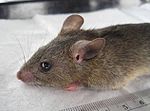
The virus that causes the illness is transmitted to sufferers by a particular type of rat which is called the multimammate rat. This rat may be recognized by the numerous breasts which it carries, and which are visible only when the rat is flipped over so that it lies with its back to the ground and its belly facing up.
LASSAFEVERMOUSE-2.jpg
LASSAFEVERMOUSE.jpg
A rat that has been infected with the lassa fever virus stays infected throughout its lifetime. The rat passes copies of the virus out in its urine and feces, the droppings themselves being deposited on floors, beds, tables, food, and other surfaces in and around the home. Some of the viral particles in the urine and feces then get into the air where they float until they infect someone who inhales the air. Where the rat’s urine or feces contaminates human food or drink, then the consumption of such food or drink becomes another means by which a person may become infected.

What Are The Symptoms?

About one to three weeks after a person has come in contact with the virus, the person may begin to experience any number of the following symptoms:
  • sore throat
  • cough
  • feeling of unwellness (malaise)
  • fever (and sometimes shivering)
  • back pains
  • abdominal pains (the abdomen is that entire region from below your chest to above your groin; some people call this entire area the stomach, but that is actually the abdomen)
  • muscle pains
  • vomiting, which may be persistent
  • diarrhea (frequent passage of watery stools)
  • swellings of the face
  • swellings of the insides of the mouth, nose, throat, vagina, etc.
  • redness of the eyes
  • weakness
  • headache
  • difficulty breathing

When the illness begins to reach its advanced and fatal stages, other symptoms that begin to emerge include:
  • generalized bleeding from the mouth, nose, vagina, and other body orifices
  • vomiting of blood
  • bloody diarrhea
  • rashes
  • disturbances in mental health
  • problems with the heart and the blood pressure
  • collapse of different organs in the body including the kidneys, the liver, and the spleen
  • convulsions


Typically, a person is infectious only when the person has symptoms. But the same person can continue to shed copies of the virus in their urine for three to nine weeks after the beginning of their symptoms. Also, the virus continues to appear in semen for up to three months after the onset of symptoms.

What Can We Do?

Although work is ongoing to find a suitable vaccine for Lassa fever virus, that work is as yet unfinished. Therefore, the prevention and control steps available to take at the moment are the following:

RODENT CONTROL

The rat that carries the virus, the multimammate rat, often lives in rural areas where it breeds very frequently. It also tends to prefer to stay in houses rather than in the surrounding bushes. But where it does stay in bushes, bush-burning activities usually result in the rats scurrying to and living in whatever houses are nearby. Therefore,
  • Rodents in the house should be killed wherever possible. You may want to get a cat.
  • Rat-holes should be plugged.
  • Food and water in the house should be stored (and covered) in rat-proof containers at all times.

HYGIENE AND PERSONAL SAFETY

  • Frequent and proper handwashings are important. Fortunately, the know-how exists from Ebola days. This Lassa fever outbreak may just be an opportunity for us to remind ourselves of what we learned about handwashing during those dark moments.
  • As much as possible, and especially in endemic (rural) areas, foods being dried outside should not be left uncovered, lest infected foraging rats deposit their urine and feces on the foods so exposed.
  • Organic trash should be disposed of far away from human dwellings or buried in the earth and the site of the burial immediately covered up to prevent the inadvertent establishment of a convocation arena for an assembly of the offending rats.
  • Health workers and other concerned people should avoid contact with the bodily fluids of an infected patient.
  • Patients who have recovered from Lassa fever should avoid sex for three months. They should also be aware that they continue to pass the virus in their urine for three to nine weeks after the onset of their symptoms.


In summary, to prevent Lassa fever, keep a clean house, a hygienic life, and clean surroundings.


Information sources - all retrieved January 11, 2016.

  1. Vanguard

Thursday, January 7, 2016

MORINGA MARVELS


First Words
There is hardly a day that goes by that I don’t have to answer, either on social media or in a consulting room, at least one question that somehow has the word moringa in it. 

Can I use moringa for my arthritis? Is moringa good for my high blood pressure? My mother is diabetic and I want to give her moringa, is that OK? We are four months pregnant and my wife wants to use moringa products, what do you think? Can I drink moringa tea while breastfeeding my baby? My girlfriend says moringa will boost my performance in bed, and I was wondering if that is true

About the only thing I have not been asked concerning moringa is whether it can be used to embalm the dead. I have not been asked that. Yet.

There appears at least as much interest in these leaves as there is in aloe vera, and quite arguably more, and this interest seems to cut across religious lines, political party walls, and racial divides. This evening therefore, when I received a phone call from my not-very-Indian choirmaster emeritus in which he wanted to discuss, not the wonders of music but the marvels of moringa, I decided maybe I should talk about it some.
Introduction
Moringa, also known as moringa oleifera or horseradish tree, is a plant which, though native to parts of Afghanistan, Bangladesh, India, and Pakistan, grows in several tropical areas including West Africa. Almost every part of this plant is thought to be useful because everything from it is used in the production of items that lay claim to possession of medicinal uses. By everything, I mean moringa’s bark, its leaves, flowers, fruit, and seeds. Every moringa thing except moringa roots.


Moringa leaves may be squeezed to have their juice extracted from them, or they may be cooked, or they may be dried and powdered, especially when the user intends it as a spice for their food. Seeds removed from mature pods of the moringa tree may be cooked or roasted. Immature pods of the moringa tree are also useful. They are shaped like drumsticks, which may be the reason why some people call the plant the drumstick tree. Oil can be extracted from moringa seeds and used in cooking. The oil from moringa is also used in cosmetics and some people have even claimed that it is useful as a lubricant in machinery. When oil has been extracted from moringa seeds, the seed cake that is left is also said to be useful in purifying well water, in removing salt from seawater, in increasing milk production in cows, and as a fertilizer.


Two facts, viz, 1) that moringa can be grown both cheaply and easily, and 2) that moringa leaves still retain large amounts of their vitamins and minerals even when dried; those two facts add several pluses to the already impressive catalog of moringa’s uses. Now, let us highlight some of those uses.


Uses

The first thing to say here is that as at the time of writing, there is not in circulation enough scientific information to fully guarantee the safety or even efficaciousness of moringa. What exists is at best informed gossip. It is important to note that moringa and other natural products are not necessarily completely safe and that dosages may be important.


The second thing to say here is that moringa, as far as we know, is taken only by mouth or applied to the skin (or topically). It is not injected, inhaled, smoked, or otherwise ingested.


If these caveats are firmly borne in mind, then we can proceed to discuss the uses that have been attributed to moringa.


FACILITATING BREAST MILK PRODUCTION
When moringa leaves are eaten after childbirth, they are thought to increase breast milk production. While this is a good thing, we have not been explicitly told whether moringa taken by the mother can be passed to the child in breast milk and, importantly, whether moringa is safe for infants.


ROLE IN ARTHRITIS
Moringa is thought to reduce the pains and inflammation of arthritis.


ROLE IN DIABETES MELLITUS
Moringa juice is thought to be helpful in glucose control. While it is thought to be effective in reducing blood glucose levels in diabetics, to what extent this happens is quite unknown.


ROLE IN HYPERTENSION
The juice from moringa leaves is thought to be helpful in stabilizing blood pressure as well as in aiding sleep. Good sleep is an important factor in blood pressure control.


ROLES IN CONSTIPATION, DIARRHEA AND GASTROINTESTINAL CONCERNS
Moringa leaves may be used as a purgative in cases of constipation. Where the problem is diarrhea, the leaves are mixed with honey and then ingested, followed by a drink of coconut milk. This same preparation is said to be helpful in dysentery as well. Moringa is also said to be useful in the treatment of stomach ulcers and intestinal ulcers.


ROLE IN ASTHMA
Used in adults, moringa is said to reduce asthma symptoms and the severity of asthmatic attacks when taken over three weeks.


ROLE IN HEADACHE
It appears that when one has a headache, and applies the leaves to their temple, the headache resolves about ten minutes later. This is the one that confuses me the most, but which I have tried, and which I think works. It worked for me.


ROLE IN EPILEPSY
Moringa is thought to have a role in reducing the episodes of seizures (or convulsions) in those with epilepsy.


ROLE IN KIDNEY STONES
Moringa is thought to be helpful in resolving kidney stones, but I am yet to come across credible literature that convincingly tells how.


ROLE IN SWELLINGS, INCLUDING GLANDULAR SWELLINGS, INFECTIONS AND INFLAMMATIONS
It is thought a poultice made from a base of fresh moringa leaves is helpful in reducing body swellings, including swellings of glands in the body. Moringa leaves are also used to treat infections of the eyes and ears, as well as fevers and inflammations of the airways through which we breathe. In general, moringa is thought to be effective against a wide range of infections, whether they are caused by bacteria, fungi, viruses, or parasites. However, please note that, to my knowledge, there has been no mention of moringa being effective against malaria.


ROLE IN SEX AND CONTRACEPTION (ANTI-FERTILITY)
Moringa is said to increase sexual drive and is in other words an aphrodisiac. Interestingly, it is also said to be effective as a contraceptive, thereby reducing fertility.


ROLE IN SKIN CARE
Moringa is said to be effective in the treatment of sundry skin infections, dandruff, athlete’s foot, warts, skin abscesses, skin wounds, and even in treatment of snake bites.


ROLE IN IMMUNITY
Perhaps because of its antioxidant properties and because of the several useful compounds it is said to contain, it is seen as being of great value in boosting the immune system.


OTHER USES
Moringa is used by some people whose skins produce a lot of sebum (oil) or other fluid as a skin-drying agent. Oil gotten from moringa is used in foods, hair creams, and even perfumes.
MORINGA-1.JPG
MORINGA-2.JPG


Side Effects And Warnings

By now, it is probably well known that the side effects of moringa, if any, are not well known. Please note that this statement is not the same as the presumption in certain quarters that moringa has no side effects. 

It is possible that moringa is safe when its leaves, fruit, and seeds are eaten as food. But the root of the moringa plant is thought to contain a substance that cause paralysis and death in a human who ingests it.


Pregnant women should not eat the root, bark, or flowers of moringa. This is because chemicals in the root, bark, and flowers of moringa can make the womb squeeze out the still-growing baby before i the appropriate time, leading therefore to a miscarriage. We are not sure if the leaves or other parts of the plant are safe in pregnancy. So moringa is best avoided when the human is pregnant.


Final Words

Moringamycin may well be the next big thing. Or moringacillin may not. It is claimed that moringa has several vitamins and minerals, in many cases, in more quantities than are available in readily available fruits. It is said to be a very helpful natural remedy for several conditions that currently afflict humans. All that may be correct.


Not enough is known about its possible side effects, especially the long-term ones if any. Not much is known about what doses are appropriate for which conditions. There is a lot that relies on the flimsy wisps of the smoke that is conjecture rather than on hard, scientific fact. But they say that there is no smoke without fire. We hope that there will come that day in the near future when the fire is discovered that is responsible for all the smoke of the good moringa stories we have heard.